Introduction: The Rise of Smart Technology in Everyday Life
Smart technology has transformed the way we work, communicate, travel, shop, manage our homes, and take care of our daily responsibilities. What once seemed like futuristic technology is now part of ordinary life. Smartphones, smart home devices, artificial intelligence, wearable technology, connected appliances, and intelligent software have become increasingly accessible to people around the world.
The ultimate value of smart technology is not simply that devices are connected to the internet. Its real value comes from the ability to make everyday activities more convenient, efficient, personalized, and responsive. Instead of requiring people to manually manage every task, smart systems can collect information, learn patterns, automate repetitive actions, and provide useful recommendations.
As technology continues to evolve, understanding how these tools can be used effectively has become increasingly important. We can benefit from smart technology without allowing it to unnecessarily complicate our lives.
What Is Smart Technology?
Smart technology refers to devices, systems, and applications that can collect information, process data, communicate with other systems, and respond intelligently to changing conditions.
A traditional appliance might perform one predefined function. A smart appliance, by comparison, can often connect to a network, receive instructions remotely, monitor its operation, and automatically adjust its behavior.
Examples include:
- Smartphones that combine communication, navigation, entertainment, photography, banking, and productivity tools.
- Smart speakers that respond to voice commands and control compatible devices.
- Smart thermostats that adjust temperature according to schedules and household patterns.
- Smart watches that provide notifications, fitness information, and activity tracking.
- Smart security systems that allow users to monitor doors, cameras, and other equipment remotely.
- Artificial intelligence applications that help with writing, research, planning, translation, and problem-solving.
The common characteristic is intelligence through connectivity, automation, data processing, or adaptive behavior.
Smartphones: The Center of Modern Digital Life
For many people, the smartphone is the most important piece of smart technology they own. Modern smartphones function as much more than communication devices.
We can use a smartphone to manage calendars, make payments, navigate unfamiliar locations, attend online meetings, access educational resources, store documents, manage finances, communicate with customers, and control smart home equipment.
Productivity applications can help us organize tasks and schedules, while cloud services allow important files to remain accessible across multiple devices. Navigation applications can provide real-time directions and traffic information, reducing the difficulty of traveling through unfamiliar areas.
Smartphones also provide powerful communication capabilities. Messaging applications, video calls, email, and social platforms allow individuals and businesses to remain connected regardless of geographical distance.
However, effective smartphone use requires balance. Notifications, social media, and entertainment can easily become distractions. We can make smartphones more useful by turning off unnecessary notifications, organizing applications, using focus modes, and setting clear periods for uninterrupted work.
Smart Homes and Connected Living
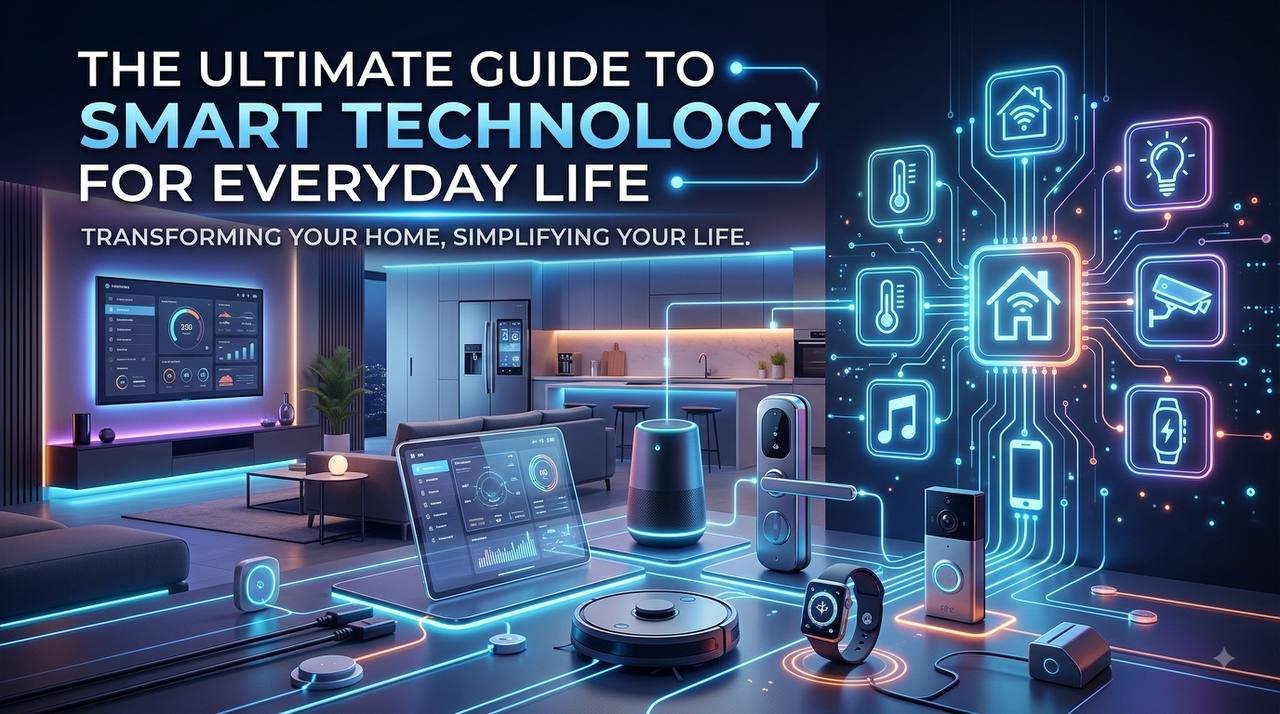
The smart home represents one of the most visible applications of connected technology. Instead of operating every household device manually, we can connect lighting, security systems, thermostats, televisions, appliances, and other equipment to a central network.
Smart lighting systems, for example, can be controlled through mobile applications or voice commands. Lights can also be programmed to turn on and off according to schedules.
Smart thermostats can improve comfort while potentially reducing unnecessary energy consumption by adjusting heating or cooling based on schedules and environmental conditions.
Smart security technology provides another important advantage. Connected cameras, doorbells, sensors, and locks can allow homeowners to monitor activity remotely and receive alerts when unusual activity occurs.
The most useful smart home is not necessarily the one containing the largest number of devices. Instead, we should focus on technology that solves genuine problems and provides measurable convenience.
Artificial Intelligence in Everyday Life
Artificial intelligence has become one of the most influential developments in modern technology. AI systems can analyze large quantities of information, recognize patterns, generate content, translate languages, summarize information, and assist with a wide range of tasks.
For everyday users, AI can serve as a practical assistant. We can use AI tools to brainstorm ideas, organize information, improve writing, create study materials, analyze documents, generate plans, and explain complicated subjects.
Businesses can use artificial intelligence to automate repetitive administrative tasks, improve customer service, analyze business data, and support marketing activities.
The greatest benefit comes when AI is treated as a productivity tool rather than a replacement for human judgment. Important information should still be reviewed, and decisions involving significant consequences should not depend solely on automatically generated results.
Wearable Technology and Personal Productivity
Wearable technology has expanded beyond traditional watches. Smart watches, fitness trackers, wireless earbuds, and other connected devices can provide information without requiring constant interaction with a smartphone.
Smart watches can display messages, calendar reminders, calls, weather information, navigation instructions, and other notifications directly on the wrist.
Fitness-oriented wearables can also help users understand patterns related to movement, exercise, and daily activity. This information can encourage people to become more aware of their routines and establish healthier habits.
From a productivity perspective, wearables can reduce the need to repeatedly check a phone. We can see important notifications quickly while ignoring less important interruptions.
Smart Technology for Work and Business
Modern workplaces depend heavily on connected technology. Cloud platforms, collaboration software, video conferencing, digital project-management systems, and AI-powered applications allow teams to work efficiently across different locations.
Cloud computing is particularly valuable because employees can access files and applications without relying entirely on a single physical computer.
Digital collaboration tools also allow teams to communicate through shared documents, project boards, messaging systems, and video meetings. This makes it easier to coordinate projects and maintain productivity in remote and hybrid work environments.
Automation is another major advantage. Repetitive processes such as scheduling, data organization, email management, and reporting can often be partially automated, allowing employees to spend more time on creative thinking, strategic planning, customer relationships, and complex decision-making.
Smart Technology for Education and Learning
Education has also been transformed by digital technology. Students can access online courses, digital libraries, educational videos, interactive applications, language-learning platforms, and AI-assisted study tools.
Instead of relying exclusively on traditional classroom materials, learners can explore subjects through multiple formats. Interactive resources can make difficult concepts easier to understand, while digital note-taking tools make information easier to organize and search.
AI-powered educational tools can also explain concepts at different levels of difficulty, generate practice questions, and help learners identify areas requiring additional study.
The most effective approach is to use technology to support active learning rather than passive consumption. Reading, practicing, questioning, and applying information remain essential parts of meaningful learning.
Smart Technology and Digital Security
Greater connectivity also creates greater responsibility. Every connected device can potentially become a target for unauthorized access, data theft, or privacy problems.
We should therefore adopt basic digital security practices. Strong and unique passwords, multi-factor authentication, regular software updates, secure networks, and careful management of application permissions can significantly improve digital security.
We should also think carefully before providing personal information to applications and online services. Understanding what data a service collects and how that information is used is an important part of responsible technology use.
Security should not be treated as something that only technical experts need to understand. Basic cybersecurity is now an everyday digital skill.
How to Choose the Right Smart Technology
With thousands of connected products and applications available, purchasing technology simply because it is labeled “smart” is rarely the best strategy.
Before adopting a new device, we should ask several practical questions:
- What problem will this technology solve?
- Will it genuinely save time or effort?
- Is it compatible with our existing devices?
- How much will it cost over its entire lifespan?
- What personal information does it collect?
- Does the manufacturer provide regular security updates?
- Can we still use the device if internet access is unavailable?
These questions help distinguish useful technology from unnecessary gadgets.
The Future of Smart Technology
The future of smart technology will likely involve even greater integration between artificial intelligence, connected devices, cloud computing, robotics, and automated systems.
Rather than interacting separately with dozens of applications, users may increasingly communicate with intelligent systems that coordinate multiple services. AI assistants could help organize schedules, manage information, automate routine workflows, and connect different digital services.
Smart environments may also become more context-aware. Devices could respond automatically to changes in location, time, preferences, and environmental conditions.
At the same time, privacy, security, transparency, and responsible AI development will become increasingly important. As systems become more capable, users will need greater control over their information and automated decisions.
Conclusion: Making Smart Technology Work for Us
Smart technology has become an essential part of modern everyday life. From smartphones and artificial intelligence to connected homes, wearable devices, digital education, and workplace automation, technology can help us save time, improve organization, communicate more effectively, and access information more easily.
The goal should not be to use as much technology as possible. The better approach is to choose technology intentionally and use it where it provides genuine value.
When we combine smart devices with responsible digital habits, strong security practices, and thoughtful decision-making, technology becomes more than a collection of gadgets. It becomes a practical tool for creating a more efficient, connected, productive, and convenient everyday life.